
Parents disagree: why repair matters more than perfection
10 min read
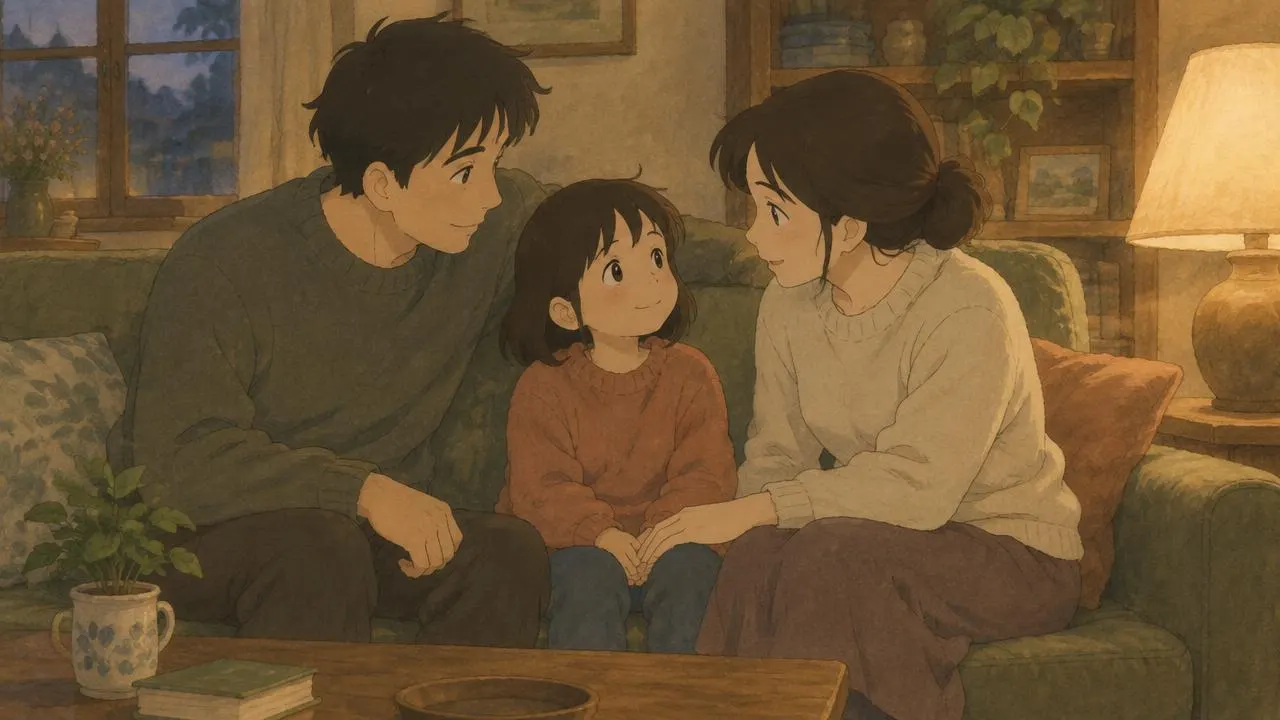
Every couple and every co-parenting relationship has disagreements. Grown-ups get tired, stressed and frustrated, and sometimes voices get raised. If you have ever argued in front of your children and then lain awake worrying about the effect on them, you are far from alone.
This article looks at what research tells us about how conflict between parents affects children, why the way we disagree matters more than whether we disagree, and how repair can help children feel safe again. It is written for parents who live together, parents who have separated, and anyone who shares the care of a child.
A note before we begin: this article is about ordinary disagreements. If there is violence, threats, or one adult is frightened of or controlled by another, that is domestic abuse, not conflict, and different support is needed. There is information about that towards the end.
What the research tells us
In 2016, the Early Intervention Foundation published a major review, led by Professor Gordon Harold at the University of Sussex, examining decades of international research on how relationships between parents affect children. One of its key findings was that the quality of the relationship between parents, whether they are together or separated, has a significant influence on children's mental health and long-term outcomes.
Importantly, the review found that it is not conflict itself that harms children. Disagreement is a normal part of any relationship. What matters is how conflict is expressed and resolved. Conflict that is frequent, intense, hostile and poorly resolved is associated with greater difficulties for children, including anxiety, low mood, behaviour problems and difficulties with friendships and school. Conflict that is handled respectfully, and resolved, can actually help children learn valuable skills.
This is genuinely reassuring. You do not need to be a couple who never disagrees. You need to be a couple, or a pair of co-parents, who disagree with care and come back together afterwards.
What children notice
Children are often far more aware of tension than adults realise. Even when arguments happen behind closed doors, children may pick up on raised voices, silences, slammed doors or the atmosphere at breakfast the next day. Babies and young children respond to tension in their carers' voices and bodies; older children and teenagers often notice, and quietly worry.
When children witness conflict, they may feel:
- Frightened, especially if voices are loud or the argument seems out of control.
- Worried that their parents will separate.
- Responsible, believing the argument is their fault, particularly if it was about them.
- Caught in the middle, feeling they must take sides or protect one parent.
- Confused, if they don't understand what happened or whether it has been resolved.
Children often try to make sense of what they have seen, and without explanation they may fill the gaps with worst-case stories. A child might lie awake thinking, "They're going to get divorced," or "It's because I didn't tidy my room."
Destructive and constructive conflict
Researchers sometimes distinguish between destructive and constructive conflict. It can be helpful to think of these as two ends of a scale, rather than two boxes.
Destructive conflict tends to include:
- Shouting, name-calling, insults or contempt.
- Threats, including threats to leave.
- Involving children, for example asking them to pass on messages or choose sides.
- Silent treatment that goes on for days.
- Arguments that are never resolved.
Constructive conflict tends to include:
- Staying calm enough to listen to each other.
- Talking about the problem rather than attacking the person.
- Taking a break when things get too heated, and coming back to it.
- Finding a compromise or agreeing to disagree respectfully.
- Showing affection and warmth afterwards.
When children see constructive conflict, they learn that people who love each other can disagree, that feelings can be expressed safely, and that problems can be solved. These are exactly the skills we hope they will take into their own friendships and relationships.
What repair looks like
Repair is the process of coming back together after a rupture. Developmental research, including Ed Tronick's work on parent and infant interaction, suggests that relationships are strengthened not by the absence of ruptures but by reliable repair. The same principle seems to apply to the wider family.
For children who have witnessed an argument, repair can include:
- Letting them see you are okay: "Dad and I disagreed earlier, and we've sorted it out now."
- Reassuring them it isn't their fault: "Grown-ups sometimes disagree. It's never because of you."
- Acknowledging if it was frightening: "We were loud earlier. I'm sorry if that felt scary."
- Showing them warmth between the adults, where that feels natural.
You don't need to share the details of the disagreement, and it is usually better not to. Children need to know that things are okay, and that the adults are handling it, not what the argument was about. The level of explanation can match their age: a seven-year-old may need a simple, reassuring sentence; a fourteen-year-old may appreciate a little more honesty, such as, "We were both stressed about money, and we're working it out together."
Things that can help in the moment
It is not always possible to stop an argument from happening. But there are things that can reduce its impact on children:
- Notice when a conversation is escalating and agree to pause: "Let's talk about this later, when the children are in bed."
- Agree a signal in advance with your partner or co-parent for when things are getting too heated.
- Keep your voice as steady as you can, even when you feel strongly.
- Avoid sarcasm, contempt or eye-rolling, which children notice.
- Never ask a child to choose sides or report back on the other parent.
- If a child comes in during an argument, stop and reassure them.
If you do lose your temper, and most parents will at some point, remember that repair is always possible. Apologising to your children for shouting is not a sign of weakness. It shows them how to take responsibility, and it helps them feel safe.
When parents have separated
For separated parents, the same principles apply, and in some ways they matter even more. Children whose parents have separated often feel caught between two homes and two sets of loyalties. Research consistently suggests that it is ongoing, unresolved conflict between parents, rather than separation itself, that is most associated with difficulties for children.
Some ways to protect children:
- Speak respectfully about the other parent in front of your child, even when it's hard.
- Keep adult conversations about arrangements and money between the adults.
- Avoid using children as messengers.
- Let children love both parents without feeling guilty.
- Where it's safe and possible, keep routines consistent across both homes.
It is completely understandable to feel hurt, angry or let down after separation. Finding a place to express those feelings away from your children, with a friend, counsellor or support group, can help you stay calmer when you are with them. The UK government's Parenting Plan resources, and organisations such as Relate and Family Lives, offer practical guidance for separated families.
Talking with your child afterwards
Some children will want to talk about what they saw. Others will seem to carry on as normal. Both are okay. You can gently open the door:
- "I noticed you went quiet after Mum and I argued. How are you feeling?"
- "Sometimes when grown-ups argue, children worry. Is there anything you're wondering about?"
- "You can always ask me about anything that's on your mind."
If your child asks a question you can't fully answer, such as "Are you getting divorced?", try to be honest in a way that is age-appropriate and doesn't burden them. You might say, "We had a disagreement, and we're sorting it out. Whatever happens, we both love you, and you will always be looked after."
Children sometimes show worry through their bodies and behaviour rather than words. Look out for changes in sleep, stomach aches, clinginess, irritability, or problems at school, and respond with patience and reassurance.
Looking after your relationship
Supporting your child also means, where possible, supporting the relationship between the adults. That can feel like one more thing on a very long list. But small moments count: a kind word, a cup of tea, a thank you, time together without screens. If you are struggling to resolve conflicts, couples counselling or relationship support can help. Relate offers counselling for couples and families, and some local authorities in England offer free or low-cost reducing parental conflict programmes.
When conflict is not ordinary conflict
It is important to be clear: if there is physical violence, threats, intimidation, controlling behaviour, or one parent is frightened of the other, that is domestic abuse. Under the Domestic Abuse Act 2021, children who see, hear or experience the effects of domestic abuse are recognised as victims in their own right.
If this is happening in your home, you are not to blame, and support is available. You can contact the National Domestic Abuse Helpline, run by Refuge, free and confidentially, 24 hours a day, on 0808 2000 247. Men can contact Respect's Men's Advice Line on 0808 801 0327. If anyone is in immediate danger, call 999. If you cannot speak, you can call 999 and then press 55 when prompted, which lets the operator know you need help. Children and young people can talk to Childline on 0800 1111.
How our stories can help
In the MySafeTherapy Kids story "Raised Voices", Leo hears grown-ups arguing at bedtime. He notices his worried feelings, uses a calming breath, and talks to a safe adult the next day, who reassures him it isn't his fault. The story is designed to help children name worried feelings and know that it's okay to talk about what they hear at home. It is not a substitute for support, but it may offer a gentle way in: "What do you think Leo was feeling? What helped him?"
Letting children see the making-up
Children often witness the argument but not the resolution, which may happen late at night or behind closed doors. Where it feels appropriate, letting children see some of the making-up can be very reassuring. This might be as simple as a hug in the kitchen, a joke shared at dinner, or hearing one parent say to the other, "I'm sorry I snapped earlier." Seeing that conflict ends, and that warmth returns, helps children build a more hopeful picture of what relationships can look like.
A gentle closing thought
No family is free of conflict, and no parent handles every disagreement perfectly. What children need most is not perfect parents, but grown-ups who keep coming back: who say sorry, who explain, and who make home feel safe again. Every time you repair, you are teaching your child that love can survive difficult moments. That is one of the most valuable lessons they will ever learn.
This article is general information, not medical advice. If you're worried about your child or yourself, speak to your GP, or call NHS 111. In an emergency call 999.