Anger issues in children: causes and what helps
7 min read
Anger gets a bad name, but it is a normal and useful emotion. As the NHS puts it, anger can tell children when things are not fair or right (NHS, Helping your child with anger issues). It becomes a problem when it turns into behaviour that is out of control or aggressive.
What is often underneath
Anger is frequently a "cover" feeling. Underneath may be fear, embarrassment, tiredness or hurt. The NHS lists common reasons a child may seem angrier than others (NHS):
- seeing family members argue or be angry with each other
- friendship problems
- being bullied
- struggling with schoolwork or exams
- feeling very stressed, anxious or fearful
- hormone changes during puberty
Anxiety in particular can look like anger. The NHS includes "quickly getting angry or irritable, and being out of control during outbursts" among the signs of anxiety in children (NHS). Children with ADHD or autism may also have more intense reactions, often because of overload rather than intent.
Team up against the anger
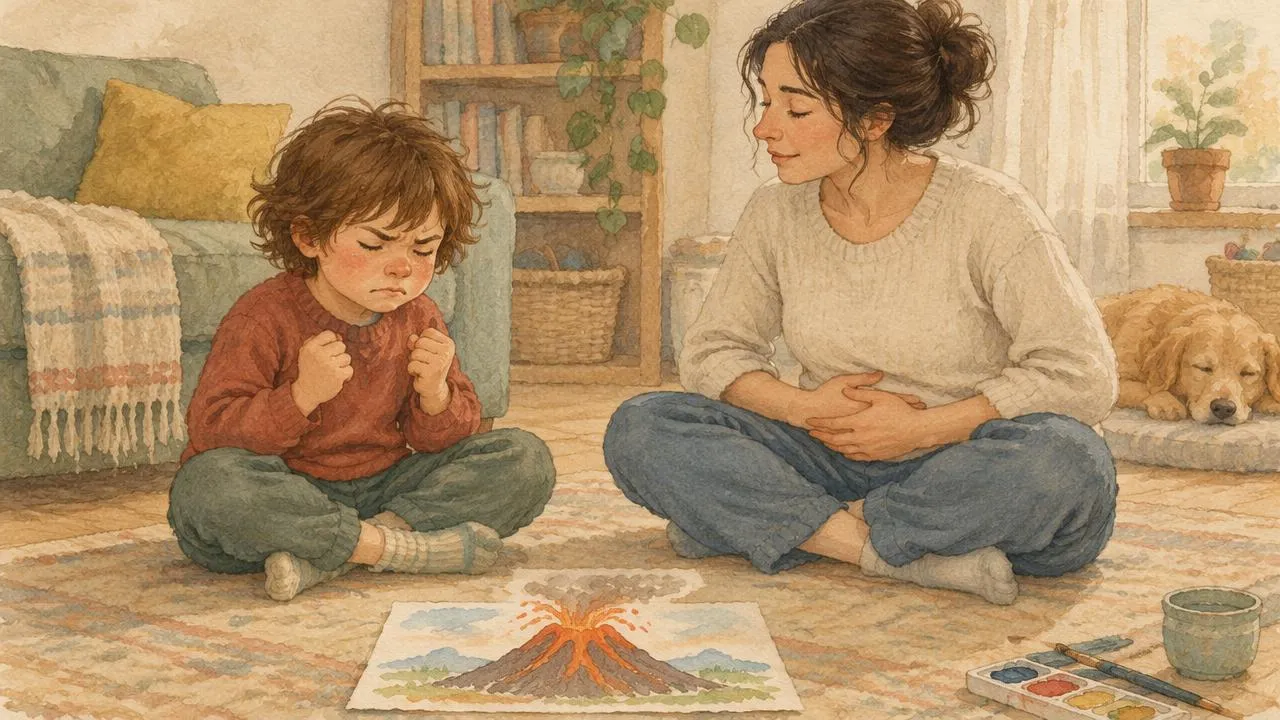
One of the most helpful ideas in the NHS guidance is to tackle anger together, so your child knows the anger is the problem, not them. With younger children, give anger a name or draw it, such as a volcano that builds and erupts (NHS).
Spot the early signs
Children can learn to notice anger building in the body: a faster heartbeat, tense muscles, clenched teeth or fists, a churning stomach (NHS). The earlier they notice, the more choice they have. A simple "anger thermometer" from 1 to 10 helps children say where they are.
Emotion coaching: what the research says
"Emotion coaching" means noticing your child's feeling, naming it, accepting it, and then helping them solve the problem. It sounds like: "You're really angry that your brother broke your model. That makes sense. Hitting isn't OK, so what can we do instead?"
There is good evidence behind it:
- A study of children with oppositional defiant disorder found that mothers' emotion coaching before treatment predicted better outcomes, especially for children with the most intense emotions (Dunsmore et al., Social Development).
- Research with young children found that parents' emotion coaching was linked with better self-regulation and attention, including in children who were more aggressive (Wilson et al., Child and Family Behavior Therapy).
- The Tuning in to Kids programme, which teaches parents emotion coaching, showed positive early findings in a community trial (Havighurst et al., Journal of Community Psychology).
In the moment
- Keep yourself steady. How you respond to anger shapes how your child learns to respond (NHS). Lower your voice, slow down.
- Safety first, talking later. A child in full rage cannot reason. Keep everyone safe, use few words, and wait.
- Offer a calming tool you practised earlier. Counting to 10, walking away, slow deep breaths, or squeezing and releasing fists are all suggested by the NHS.
- Repair afterwards. Once calm, talk about what happened, what the feeling was, and what could help next time. Repair teaches more than punishment.
Look at patterns
Keep a short note for a week or two: time of day, what happened before, how long it lasted. Many families discover patterns, such as hunger after school, transitions away from screens, or tiredness on certain days. Small changes to those moments can reduce outbursts a lot.
When to get help
Speak to your GP or school if anger is frequent, causing harm to your child or others, getting worse, or affecting school and friendships. The NHS also suggests YoungMinds and Family Lives for further support. You can call Family Lives on 0808 800 2222.
How MySafeTherapy can help
Children can only use calming skills in the moment if they have practised them when calm. On MySafeTherapy Kids, 8–11 year olds learn to notice the early body signs of anger and try a breathing pause through interactive stories. For 12–14 year olds, Big feelings reset offers a simple plan for big moments. The Grown-Up Guide helps you use the same words at home.
You can try MySafeTherapy grow free.
If you or your child would like more support, MySafeTherapy also offers therapy for families. You can talk with a qualified, UK-registered therapist online, whether that is a parent consultation about what is happening at home, one-to-one support for your own stress or low mood, or family sessions. Find a therapist at MySafeTherapy.
Your own mental health matters too
Looking after a child who is struggling can affect your own wellbeing. If you have been feeling low, anxious or overwhelmed for more than a couple of weeks, talking therapy can help. In England you can refer yourself to NHS Talking Therapies without seeing a GP, or speak to your GP anywhere in the UK. The YoungMinds Parents Helpline (0808 802 5544) offers free advice to parents worried about their child.
Sources
This article is general information, not medical advice. If you're worried about your child or yourself, speak to your GP, or call NHS 111. In an emergency call 999.